How to Create Before-and-After Outfit Transformations
June 26, 2026
The before-and-after reveal is one of the most psychologically compelling formats in fashion content. It taps into contrast, curiosity, and the desire for transformation — all within a few seconds of video. Whether you are a boutique showing how a single statement piece elevates a basic wardrobe, or an e-commerce brand demonstrating the real-world impact of a new collection, the outfit transformation video consistently outperforms standard product clips for engagement and saves. The challenge is not the concept — it is execution. Lighting mismatches, weak transitions, and underwhelming “after” reveals kill the effect. This guide gives you a repeatable framework for creating before after fashion content that stops the scroll and drives action.
- A strong outfit transformation video relies on consistent framing between the before and after shots to maximise the visual contrast.
- The “before” state should be relatable but not unflattering — it sets the baseline without alienating the viewer.
- Audio pacing, transition timing, and colour grading all need to serve the reveal moment, not compete with it.
- AI tools like Outfit Video can generate transformation videos directly from outfit photos, removing the need for complex editing software.
- Posting format and aspect ratio matter — a transformation that looks polished on TikTok needs the correct vertical specs to perform on Reels and Shorts too.
- Tracking completion rate and shares, not just views, tells you whether your transformation content is actually landing.
Why Transformation Videos Work in Fashion
The before after fashion format exploits a fundamental principle of visual storytelling: contrast creates meaning. When viewers see a mundane or understated starting point followed by a polished, confident result, the brain registers the gap as aspiration. That gap is your product’s value proposition, communicated visually without a single word of copy.
Algorithmically, transformation content also benefits because it demands completion. Viewers who see the “before” state feel a psychological pull to watch through to the reveal. This drives video completion rate up, which in turn signals quality to TikTok, Instagram, and YouTube Shorts. Higher completion rates expand organic reach without additional ad spend.
There is also a trust dimension. A clothing makeover video that shows genuine before-and-after styling — rather than just a product on a white background — demonstrates how the item performs in a real outfit context. That is persuasive in a way that flat product photography simply cannot replicate. For a deeper look at why video consistently outperforms static imagery in fashion retail, see Product Video vs Static Images: Which Drives More Sales?
Planning Your Before-and-After Concept
Strong transformation videos are planned, not improvised. Before you shoot a single frame, define the narrative arc with precision.
- Choose a clear transformation axis. This could be casual to formal, day to night, basic to bold, or mismatched to coordinated. The axis should be immediately legible to a viewer who has never seen your brand before.
- Select the hero piece. Identify the one item that drives the transformation. Everything else in the “after” look should support it, not compete with it.
- Write a micro-script. Even a five-second video benefits from knowing the exact moment the reveal hits. Plan where the cut or transition falls and what the viewer’s eye should land on first in the “after” frame.
- Match your platform. A transformation designed for a 60-second TikTok can be re-cut for a 15-second Reel, but the pacing differs. Plan the primary version first, then adapt.
If you are building this type of content into a broader calendar, the principles in Fashion Content Calendar: 30 Days of Video Ideas offer a useful framework for batching transformation concepts by theme and season.
Shooting for Contrast and Consistency
The most common technical failure in outfit transformation video production is inconsistent framing between the before and after shots. If the camera angle shifts, the background changes, or the lighting temperature differs, the contrast reads as discontinuity rather than transformation. The viewer’s brain has to work harder, and the emotional payoff shrinks.
Follow these technical principles on set:
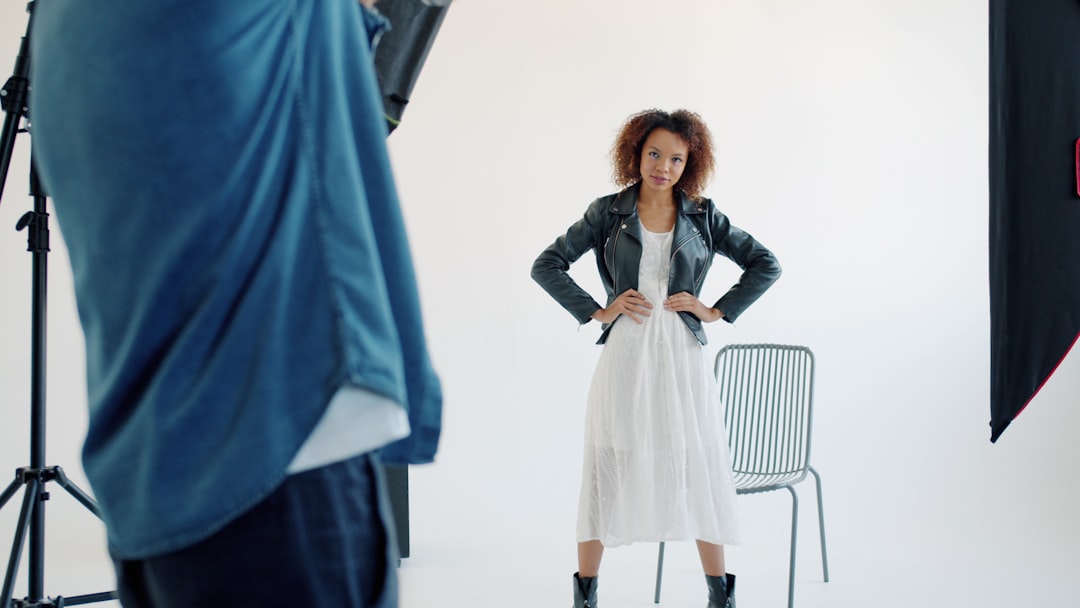
- Lock the camera position. Use a tripod or mount. The subject should occupy the same portion of the frame in both shots. Even a slight zoom or angle shift disrupts the reveal.
- Control lighting strictly. Shoot both states in the same session with the same light source. If you shoot the “before” in morning light and the “after” the following day, colour temperature will drift visibly.
- Choose a neutral, consistent background. A plain wall or minimal studio backdrop keeps visual focus on the clothing. Save textured or busy environments for the “after” state only if the setting is integral to the concept.
- Standardise the subject’s posture and expression. The body language shift from “before” to “after” should be intentional — not an accidental artefact of fatigue or distraction between takes.
Building the Transformation Moment
The reveal is the entire point of a clothing makeover video. Everything before it is setup. The way you execute the cut or transition determines whether the payoff lands or fizzles.
Hard cuts work when the contrast between before and after is stark. The abruptness amplifies the visual difference. Wipe or swipe transitions work when you want to maintain the spatial illusion of the same frame — the transformation appears to happen in place, which is especially effective for quick styling swaps. Motion-matched transitions, where a gesture or turn at the end of the “before” clip is seamlessly continued in the “after” clip, create the most sophisticated effect and reward close watching.
Audio is equally important. A beat drop, a tempo shift, or even a simple whoosh sound cue at the moment of the reveal amplifies the visual payoff. Music selection should reflect the energy of the “after” look, not the “before.” For a comprehensive look at trending transition formats across platforms, Outfit Transition Videos: Trending Formats for 2026 covers what is performing right now.
Using AI to Produce Transformation Videos at Scale
For brands and creators producing transformation content consistently, the manual editing process becomes a bottleneck fast. Sourcing models, booking studio time, editing transitions frame by frame — this workflow is expensive and slow when you need to cover an entire catalogue.
AI video generation tools change the economics significantly. By feeding outfit photos directly into a platform like Outfit Video, you can generate polished outfit transformation video content without a production crew. The tool handles animation, motion, and sequencing from static imagery, outputting vertical video formatted for TikTok, Reels, and Shorts.
This is particularly powerful for e-commerce brands that already have high-quality product photography. Those existing assets become the raw material for transformation videos without a reshoot. A flat lay becomes a dynamic “before” frame; a styled full-body shot becomes the “after” reveal. If you are working with flat lay photography specifically, How to Add Motion to Flat Lay Photos With AI explains how to bring static images to life with minimal effort.
Scaling this way also means you can test multiple transformation narratives — casual to formal, monochrome to colour, one brand versus a complete styled look — without multiplying production costs proportionally.
Distributing and Measuring Your Transformation Content
A transformation video that performs on one platform will not automatically translate to another without adaptation. Aspect ratio, caption placement, and optimal video length differ across TikTok, Instagram Reels, YouTube Shorts, and Pinterest Video. Before publishing, verify that your clothing makeover video meets the technical specs for each platform. Vertical Video Specs for Every Social Platform in 2026 is a practical reference for getting this right.
On the measurement side, treat standard view counts as a vanity metric for this format. The KPIs that actually tell you whether your transformation content is working include:
- Video completion rate: Are viewers watching through to the reveal? A drop-off before the transition indicates the “before” segment is too long or too dull.
- Saves and shares: Transformation videos that genuinely inspire outfit ideas get saved at higher rates than passive entertainment content. Saves signal purchase intent.
- Profile visits from the post: A strong reveal creates curiosity about the brand. A spike in profile visits after a transformation post indicates the content is working as a top-of-funnel discovery tool.
- Click-through to product: If the video links to a product page or uses a shoppable tag, click-through rate measures the direct commercial impact.
FAQ
How long should a before-and-after outfit transformation video be?
For TikTok and Instagram Reels, the most effective length is between 10 and 30 seconds. The “before” segment should take no more than one-third of the total runtime — the bulk of the video should be the reveal and the styled “after” look. Longer formats up to 60 seconds work when the transformation involves multiple outfit changes or a narrative arc, but keep the pacing tight and eliminate any dead time before the first transition.
Do I need a model or actor to create a clothing makeover video?
Not necessarily. AI video generation platforms can animate outfit photos — including flat lays and mannequin shots — into dynamic transformation sequences without a live model. This significantly reduces production cost and time for e-commerce brands with existing product photography. Human models do add a relatability dimension that performs well for aspirational styling content, but they are not a prerequisite for an effective clothing makeover video.
What is the best transition style for an outfit transformation video?
It depends on the energy of the content and the platform. Hard cuts work well for high-contrast, high-energy transformations on TikTok. Motion-matched transitions, where a spin or arm gesture bridges the before and after, create a seamless and visually satisfying effect on Reels. Wipe transitions are effective for side-by-side or in-place reveals. Whichever style you choose, sync it precisely to the audio beat or cue — a transition that lands even one frame off feels amateurish.
How can small fashion brands produce transformation videos without a big budget?
The most cost-effective approach is to use AI video tools that convert existing product photos into video content. This removes the need for additional shoots, editing software subscriptions, or freelance editors. Focus on one clear transformation concept per video, keep the background simple, and batch your content creation — planning and shooting multiple transformations in a single session reduces per-video cost substantially.
Which platforms perform best for before after fashion content?
TikTok and Instagram Reels currently deliver the strongest organic reach for transformation content because their algorithms reward high completion rates — which this format naturally generates. Pinterest Video is effective for driving longer-term discovery and purchase intent, particularly for styled outfit ideas. YouTube Shorts works well for transformations with a slightly longer narrative or tutorial element. Posting to all three with platform-appropriate edits maximises total content return for each video produced.
Ready to turn your outfit photos into scroll-stopping videos? Try Outfit Video free and create your first AI fashion video in minutes.
Ready to turn your outfit photos into scroll-stopping videos? Try Outfit Video free and create your first AI fashion video in minutes.